
RECOGNISING OPPORTUNITY
CREATING COMMERCIAL ADVANTAGE
ABOUT COMMERCIAL LEVERAGE
Practical growth architecture for businesses with somewhere bigger to go.
For established businesses that need a smarter route into new markets.
Commercial Leverage works with established businesses that have a proven offer but need a faster, more commercially intelligent route into new territories, markets or channels.
The work combines distribution-model design, network recruitment, sales leadership and technology-enabled customer acquisition.

HOW THE WORK STARTS
Start with the commercial facts, not a preferred model.
1. DEFINE THE OPPORTUNITY
Clarify the offer, economics, ideal operator and priority markets.
2. TEST THE CONSTRAINTS
Identify what must remain controlled and what is limiting growth today.
3. CHOOSE THE MODEL
Compare franchise, licence, partnership, direct-sales and hybrid routes.
4. BUILD AND PROVE
Select the right route, test the economics and pilot before wider rollout.
EXPERIENCE BEHIND THE WORK
BUILT IN THE REAL WORLD
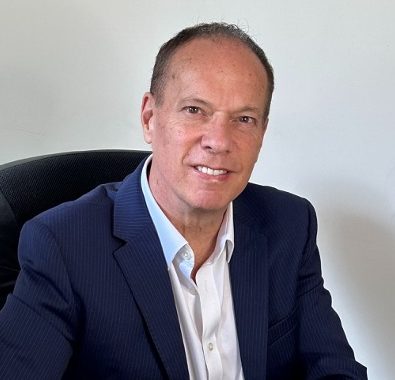
Commercial Leverage is led by David Abingdon, a commercial builder with more than 35 years’ experience creating businesses, sales organisations and international distribution networks.
His record includes building WPA to £35.5 million in annual recurring income within 2.5 years; creating £4.5 million in first-year income at Insurety from an initial £3,000 investment; recruiting and training almost 450 franchisees across Quantum and Alchemy; recruiting approximately 24 SecurityTrust Finance franchisees in nine months; and leading 200–250 commission-based salespeople.
That experience now informs practical growth projects across franchising, licensing, partnerships, direct sales and technology-enabled customer acquisition.
WHAT COMMERCIAL LEVERAGE ACTUALLY DOES
The work is practical: choose the right route, prove the numbers and build only what the opportunity needs.

TECHNOLOGY AS INFRASTRUCTURE
AITRA is used where it can strengthen lead identification, qualification, follow-up, appointment generation and network visibility. It supports the commercial model; it is not the whole proposition. The objective is more sales capacity without a conventional increase in headcount and cost.
THE PRINCIPLE IS SIMPLE
Use technology where it removes friction, reduces acquisition cost or helps operators reach revenue sooner.
WHAT WE TEST BEFORE RECOMMENDING A MODEL
A good idea still has to survive the commercial questions.
Before recommending franchising, licensing, partnering or direct sales, we test what must be true for the model to work.
The aim is to expose weak assumptions early, strengthen the economics and identify a sensible pilot before committing to a wider rollout.
Proven offer
Can another operator reproduce the customer result?
Unit economics
Is there enough margin for the company and the local operator?
Operator fit
Who is best equipped and motivated to run the local business?
Market demand
Which territories have the strongest and most accessible demand?
Control
What must remain central and what can safely be delegated?
Customer acquisition
How will each operator consistently find and win customers?
Recruitment economics
Is the proposition strong enough to attract capable, committed operators?
International transferability
What must change for a new country, culture or regulatory environment?
Technology leverage
Where can automation increase sales capacity or reduce cost?
Management capacity
Can the central team support growth without becoming the bottleneck?
Regulatory fit
Which legal structure and qualified advisers will be required?
Pilotability
Can the model be tested in one territory before wider rollout?
These questions protect the investment.
They expose weak assumptions before they become expensive commitments.
The result is a clearer commercial decision, a stronger operator proposition and a pilot that can be measured before wider rollout.
THE DECISION STANDARD
DEMAND
A real customer problem, a proven offer and territories worth pursuing.
ECONOMICS
Enough margin and recurring value for the company and the local operator.
EXECUTION
A practical recruitment, customer-acquisition and support system that can scale.
PROOF, NOT THEORY
The methods come from businesses and networks built in the real world—across industries, countries and commercial models.
INSURANCE
Built Insurety to £4.5m first-year income from a £3,000 investment.

HEALTHCARE
Built WPA to £35.5m annual recurring income within 2.5 years.

FINANCIAL SERVICES
Recruited almost 450 franchisees, plus 24 for SecurityTrust in nine months.

AI INFRASTRUCTURE
Built AITRA to add sales capacity without conventional headcount.

Experience matters most when it produces a clearer decision.
Choose the right model. Prove the economics. Start with a measured pilot.
That is the discipline behind every Commercial Leverage engagement.
A PRACTICAL FIRST CONVERSATION
If your business has a proven offer and a credible ambition to enter new markets, twenty minutes may be enough to establish whether the idea deserves a second conversation.

RECOGNISING OPPORTUNITY
CREATING COMMERCIAL ADVANTAGE
info@commercialleverage.com
CommercialLeverage.com
© Copyright 2026 Commercial Leverage Group. All Rights Reserved